
Stretch hood film is often positioned as a high-end, future-ready pallet packaging solution. It offers strong load stability, full weather protection, and consistent performance in automated environments. However, stretch hood film is not a universal upgrade for every packaging operation.
In reality, using stretch hood film in the wrong scenario can increase costs, reduce flexibility, and expose operational weaknesses rather than solve them. Knowing when not to use stretch hood film is just as important as understanding its advantages.
This article is written for decision-makers who want clarity, not marketing claims.
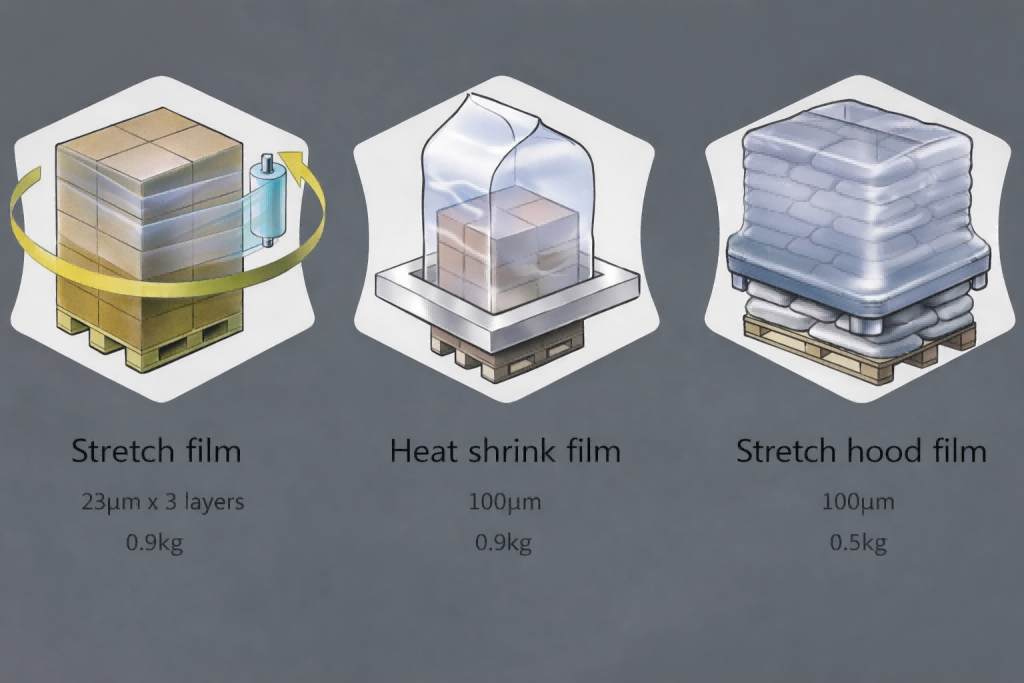
Stretch Hood Film Is a System, Not Just a Film
Before evaluating whether stretch hood film fits your operation, it is important to understand one core principle.
Stretch hood film does not behave like stretch wrap. It is part of a tightly integrated system that includes film properties, pallet quality, load consistency, and machine configuration. When these elements are aligned, performance is excellent. When they are not, problems appear quickly.
This systemic nature is the root reason why stretch hood film is unsuitable for certain environments.
Operations With Constantly Changing Pallet Dimensions
Highly Variable Load Heights and Footprints
Stretch hood film systems rely on predictable pallet dimensions. Film hoods are selected based on expected height ranges, stretch ratios, and load geometry.
If your operation regularly handles:
- Mixed pallet heights within the same production run
- Inconsistent stacking patterns
- Non-standard pallet footprints
- Frequent SKU changes without standardized palletization
Stretch hood film becomes inefficient and difficult to manage.
Why Stretch Wrap Performs Better Here
In highly variable environments, stretch wrap allows operators to adjust wrapping patterns in real time. While this introduces variability in quality, it offers flexibility that stretch hood systems are not designed to provide.
In such cases, stretch hood film may reduce operational freedom rather than improve performance.

Low-Volume or Intermittent Packaging Operations
When Throughput Does Not Justify Automation
Stretch hood film systems are optimized for medium to high throughput operations. Their value comes from speed, labor reduction, and consistency over large volumes.
If your facility:
- Wraps a limited number of pallets per shift
- Operates intermittently rather than continuously
- Does not face labor constraints in packaging
The investment may not deliver meaningful returns.
Cost Is More Than Film Price
Although stretch hood film can reduce material usage per pallet, the system requires stable volumes to offset equipment, maintenance, and technical support costs.
For low-volume environments, simpler solutions often remain more economical.
Operations Without Strong Process Discipline
Pallet Quality and Load Assembly Matter
Stretch hood film applies uniform tension around the entire load. This makes any upstream inconsistency immediately visible.
If your operation struggles with:
- Damaged or inconsistent pallets
- Misaligned loads
- Leaning stacks
- Uncontrolled load assembly practices
Stretch hood film will not correct these issues. It will highlight them.
Stretch Wrap Masks Variability, Stretch Hood Film Exposes It
Stretch wrap often compensates for poor pallet quality through extra wraps or higher tension. Stretch hood film does not offer this margin for error.
Operations without strong process control should address fundamentals before considering stretch hood systems.
Businesses That Prioritize Maximum Flexibility
When Packaging Must Adapt Daily
Some operations rely on flexibility as a core advantage. Emergency orders, custom pallet builds, last-minute changes, and mixed shipments are part of daily reality.
Stretch hood film systems are designed for repeatability, not improvisation.
Once configured, they perform best when conditions remain stable. Frequent adjustments reduce efficiency and increase the risk of errors.
In flexibility-driven environments, simpler wrapping methods may better support operational goals.
Lack of Technical Support and Film Expertise
Stretch Hood Film Is Not a Commodity Product
Unlike standard stretch wrap, stretch hood film performance depends heavily on:
- Controlled film thickness
- Stable stretching behavior
- Consistent surface properties
- Compatibility with specific equipment
Using low-quality film or working with suppliers who only provide material—without technical understanding—often leads to film breaks, unstable loads, and downtime.
Why Manufacturer Expertise Matters
Producers such as Sinyar Pack approach stretch hood film as an engineered solution rather than a generic product. Without this level of technical support, adopting stretch hood film becomes risky, especially for first-time users.
If reliable technical guidance is not available, postponing adoption may be the smarter decision.
When Environmental Protection Is Not a Priority
Full Coverage Is a Key Advantage—but Not Always Needed
Stretch hood film fully covers the pallet, including the top. This is critical for outdoor storage, port handling, and long-distance export.
However, if your products:
- Remain indoors throughout logistics
- Move short distances
- Are handled in controlled environments
The added protection may not deliver proportional value.
In such cases, the benefits of stretch hood film may be underutilized.
Choosing Based on Fit, Not Trend
Technology Adoption Should Solve Problems
Stretch hood film is often adopted because it appears more advanced or because competitors use it. This is a poor basis for decision-making.
What works for another company may reflect:
- Different logistics routes
- Different labor costs
- Different automation maturity
- Different product characteristics
The right packaging solution is the one that fits your operation—not the one that looks most modern.
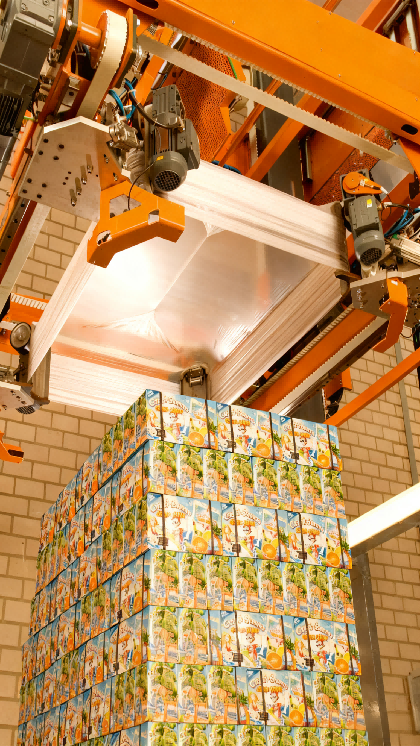
When Stretch Hood Film Does Make Sense
Understanding limitations clarifies suitability.
Stretch hood film typically performs best when:
- Pallet dimensions are consistent
- Volumes are stable and predictable
- Automation is a long-term strategy
- Load stability failures are costly
- Outdoor exposure is unavoidable
In these environments, stretch hood film delivers measurable operational value.
Final Thoughts
Stretch hood film is neither a universal upgrade nor an unnecessary luxury. It is a powerful solution when applied under the right conditions.
Knowing when not to use stretch hood film protects businesses from costly mistakes and leads to smarter packaging decisions. Experienced manufacturers like Sinyar Pack focus on alignment between material, process, and real-world use—because the best packaging solution is the one that truly fits.