
Packaging technology has advanced rapidly in the last decade, revolutionizing logistics, warehousing, and freight protection. Among the most important innovations is stretch hood film, a modern pallet-packaging solution engineered to protect products from weather, dust, moisture, and mechanical damage—all while achieving superior load stability and reducing packaging costs.
From industrial manufacturers and logistics operators to beverage suppliers and building material producers, businesses worldwide are moving toward stretch hood film as the preferred pallet-protection technology. Its unmatched strength, elasticity, and sealing performance make it one of the most efficient load-unitization systems available today.
As one of the leading innovators in industrial packaging, Sinyar Packing Film has become a trusted global supplier of high-performance stretch hood film, helping companies reduce product loss, increase shipping efficiency, and streamline palletization processes.
This comprehensive guide explores everything you need to know about stretch hood film, including its structure, manufacturing process, applications, sustainability advantages, and how to choose the right film for your operation.

Understanding Stretch Hood Film
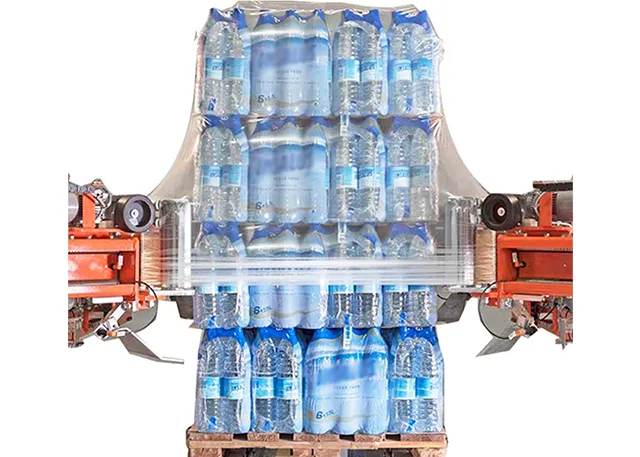
Stretch hood film is a highly elastic, heat-free pallet-packaging film designed to protect palletized goods. Unlike shrink hoods that require heat to tighten around the pallet, stretch hoods are mechanically stretched and applied using automated hooding machines, saving energy and eliminating the risk of heat damage.
The film fits over the load like a “hood,” then retracts around the pallet to create a tight, secure, and waterproof protective layer.
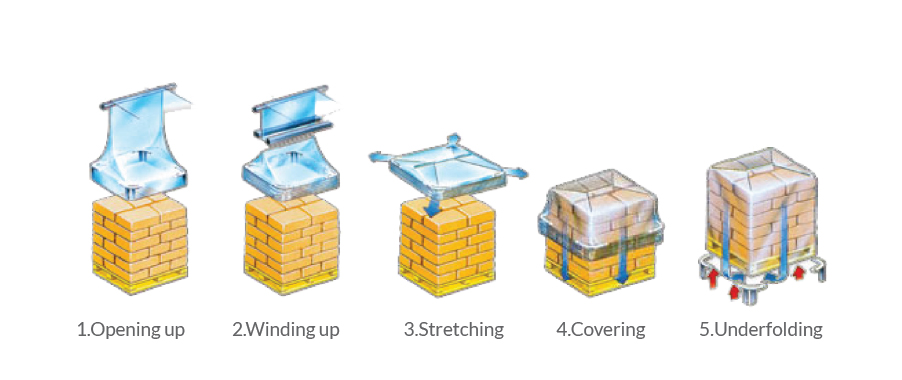
How Stretch Hood Film Works
The process involves:
- The film tube is cut and opened into a hood.
- The hood is stretched vertically and horizontally.
- The stretched hood is pulled over the pallet.
- Once released, the film contracts tightly around the goods.
The result:
✔ Strong unitization
✔ Outstanding protection from environmental hazards
✔ Highly stable pallets during transport
Evolution of Pallet Packaging Technologies
To understand why the market has shifted toward stretch hood systems, it helps to look at how pallet packaging technologies have evolved.
1. Traditional Shrink Hood Film
- Requires heat tunnels or heat guns
- High energy consumption
- Potential risk of heat damage
- Excellent tightness but expensive to maintain
2. Stretch Film / Stretch Wrap
- Very common
- Cost-effective and easy to use
- Requires multiple revolutions around the pallet
- Not fully waterproof
- Lower load stability compared to hooding
3. Stretch Hood Film (Modern Standard)
- No heat required
- Lower long-term cost
- High load stability
- Superior weather protection
- Faster packaging speeds
- Ideal for automated warehouses
The shift to stretch hood film reflects the global movement toward automation, sustainability, and long-term cost reduction.

Key Benefits of Stretch Hood Film
Stretch hood film offers significant advantages compared to other pallet-packaging materials.
1. Superior Load Stability
Its multi-directional elasticity offers unmatched load retention, minimizing product shifting during shipping.
2. Waterproof & Dustproof Protection
The sealed hood design protects pallets from:
- Rain
- Humidity
- Dust
- Contamination
Essential for industries such as cement, fertilizers, beverages, chemicals, and food logistics.
3. Energy Savings (No Heat Needed)
Compared to shrink hoods, stretch hood systems save:
- Up to 80% energy
- Maintenance costs
- Downtime caused by heat tunnels
4. Sustainability Advantage
Stretch hood film reduces:
- Plastic consumption
- Energy usage
- CO₂ emissions
Sinyar Packing Film integrates advanced downgauging technology to minimize thickness without compromising strength.
5. Faster Packaging Speed
Modern hooding machines can pack:
- Up to 250 pallets per hour
Ideal for high-volume operations.
6. Excellent Transparency
Allows easy barcode scanning and visual inspection.
Technical Structure of Stretch Hood Film
The performance of stretch hood film comes from its specialized multi-layer construction.
Multi-Layer Co-Extrusion (3–7 Layers)
Common layer structure:
- Outer Layer: Slip properties, UV resistance
- Middle Layer: Strength and puncture resistance
- Inner Layer: Cling, holding force
Materials Used
- LDPE (flexibility and clarity)
- LLDPE (puncture resistance)
- mLLDPE (maximum strength and elasticity)
- Additives: UV stabilizers, anti-block, anti-slip
Performance Characteristics
Stretch hood film must demonstrate:
- High stretchability (up to 250–300%)
- Excellent puncture resistance
- Strong dart impact performance
- Stable holding force
- Uniform thickness profile
- High tear resistance
These characteristics determine how well the film performs with different pallet loads.
Types of Stretch Hood Film
1. Standard Stretch Hood Film
General-purpose for indoor storage and moderate load protection.
2. Heavy-Duty Stretch Hood Film
Designed for:
- Building materials
- Chemicals
- Fertilizers
- Sharp-edged goods
3. UV-Stabilized Stretch Hood Film
Perfect for outdoor storage, preventing:
- Film degradation
- Cracking
- Yellowing
4. Printed Stretch Hood Film
Allows:
- Branding
- Product identification
- Safety labeling
Sinyar Packing Film offers multi-color printing options for high-visibility branding.
How Stretch Hood Film Is Manufactured
1. Resin Selection & Blending
Choosing the right combination of PE resins and functional additives.
2. Co-Extrusion
Resins are melted and extruded through a multi-layer die to form a tube film.
3. Cooling and Solidifying
Rapid cooling ensures film clarity and mechanical strength.
4. Winding & Thickness Control
Automated monitoring ensures uniform thickness across the film.
5. Corona Treatment
Enhances printability and surface adhesion.
6. Cutting & Packaging
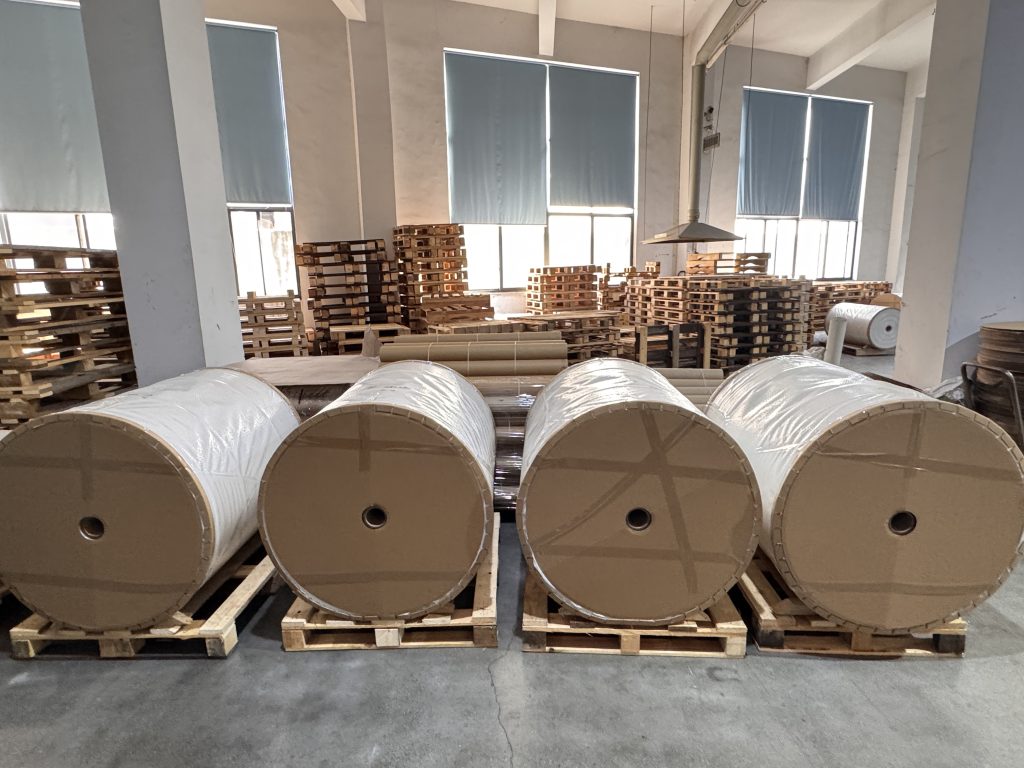
Converted into rolls compatible with pallet hooding machines.
Sinyar Packing Film uses modern extrusion lines to ensure consistency, clarity, and performance stability in all stretch hood films.
Stretch Hood Film vs Shrink Hood Film vs Stretch Film
| Feature | Stretch Hood Film | Shrink Hood Film | Stretch Film |
|---|---|---|---|
| Heat Required | ❌ No | ✔ Yes | ❌ No |
| Energy Consumption | Low | High | Low |
| Weather Protection | Excellent | Excellent | Moderate |
| Load Stability | Excellent | Excellent | Moderate |
| Automation | High | Medium | Medium |
| Packaging Speed | Fast | Slow | Medium |
| Cost Efficiency | High | Medium | High |
| Sustainability | Excellent | Fair | Good |
Stretch hood film offers the best combination of cost, performance, and sustainability.
Applications Across Industries
Stretch hood film is widely used in:
1. Building Materials
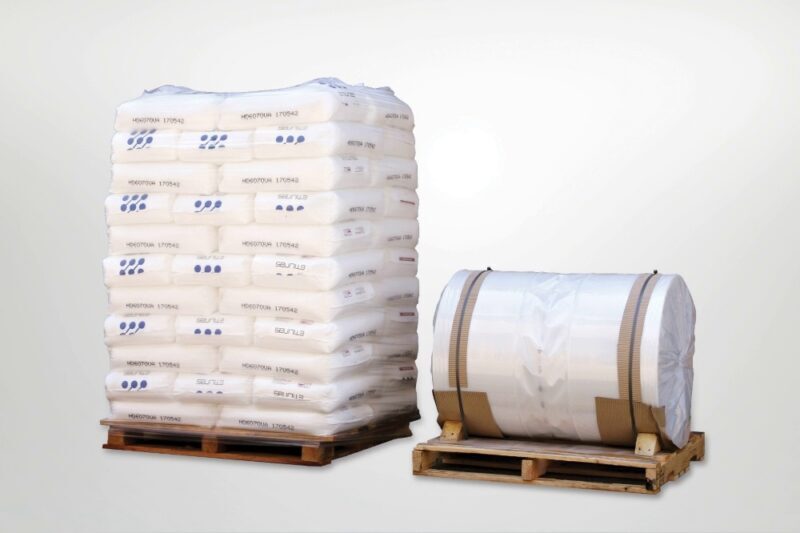
Cement, bricks, concrete blocks, roofing tiles.
2. Beverages
Water bottles, soft drinks, juices.
3. Food & FMCG
Packaged food, edible oils, household goods.
4. Agriculture & Fertilizers
Bagged fertilizer, seeds, grains.
5. Chemicals
Drums, IBC tanks, pails.
6. Logistics & Warehousing
General pallet unitization and long-distance transport.
Its versatility makes it suitable for nearly every palletized product category.
Sustainability and Recycling of Stretch Hood Film
As global supply chains become more environmentally conscious, the demand for packaging solutions with lower environmental impact continues to rise. Stretch hood film is positioned as one of the most eco-efficient pallet packaging materials available today, offering a unique blend of performance, recyclability, and downgauging potential.
Unlike traditional shrink hoods that require significant heat energy, stretch hood systems operate without any thermal processing. This dramatically reduces energy usage and lowers carbon emissions associated with packaging operations.
1. Fully Recyclable Material Structure
Stretch hood film is typically made from:
- LDPE
- LLDPE
- mLLDPE
- Eco-additives (optional)
Because these polymers are part of the polyethylene family, the film is:
- 100% recyclable
- Compatible with standard recycling streams
- Accepted by most global recycling facilities
This allows companies to align with:
- Corporate sustainability goals
- ISO 14001 compliance
- Regional plastic-waste reduction requirements
2. Downgauging: Less Material, Same Strength
Modern extrusion technologies—such as multi-layer co-extrusion and nano-layer blending—allow manufacturers like Sinyar Packing Film to produce thinner films with:
- Equal or better puncture resistance
- Improved stretch performance
- Higher load stability
This reduces plastic use per pallet by up to 35%, directly lowering:
- Material consumption
- Waste generation
- Overall packaging cost
3. Reduced Carbon Footprint
Key sustainability advantages:
- No heat tunnels → up to 80% energy savings
- Less film used compared to stretch wrap
- Longer storage life → fewer damaged products
- Minimal packaging waste
For companies striving to achieve net-zero or low-carbon logistics, stretch hood film is an ideal choice.
4. Support for Closed-Loop Packaging Systems
Many industries now collect used polyethylene packaging and return it for recycling. Stretch hood film seamlessly fits into closed-loop systems, helping businesses:
- Reduce disposal costs
- Reuse recycled materials
- Strengthen environmental certifications
Global Market Trends in Stretch Hood Film (2025 Update)
The global stretch hood film market continues to grow rapidly, driven by automation, warehouse optimization, and sustainability demands.
1. Fast Growth in Automated Palletizing
Industries worldwide are upgrading manual packaging lines to automated hooding systems.
Demand comes primarily from:
- Beverage manufacturers
- Large logistics centers
- Fertilizer and chemical producers
- Brick and cement manufacturers
Automation ensures:
- Higher packaging speeds
- Reduced labor costs
- Lower product damage rates
2. Rising Need for Weatherproof Export Packaging
The increase in global trade has made waterproof pallet protection crucial. Stretch hood film provides:
- UV protection
- 100% waterproof sealing
- Dust and dirt isolation
- Consistent pallet appearance
Outdoor storage and long-distance export industries especially favor hood packaging.
3. Sustainability Regulations Are Accelerating Adoption
Regions such as Europe and North America demand:
- Lower carbon emissions
- Recyclable packaging
- Reduced plastic usage
Stretch hood film meets all these requirements.
4. Growth in Printed Stretch Hood Film
More brands want:
- Custom logos
- Branded pallets
- Multi-color printed hoods
Printed hood films improve product identification, reduce theft, and strengthen brand visibility—especially in building materials, fertilizer, and beverage sectors.
5. Asia Becoming a Global Manufacturing Hub
China, in particular, has emerged as a powerhouse for stretch hood production due to:
- Advanced multi-layer extrusion technology
- Competitive production costs
- Flexible customization capabilities
Sinyar Packing Film is part of this modern manufacturing ecosystem, exporting stretch hood film to global markets.
Why Choose Sinyar Packing Film as Your Stretch Hood Film Partner
As demand for high-performance stretch hood film grows, choosing a reliable manufacturer becomes essential. Sinyar Packing Film has built a strong global reputation for quality, consistency, and technical innovation.
1. Advanced Manufacturing Technology
Sinyar uses:
- Multi-layer co-extrusion lines
- High-precision thickness control
- Automated winding systems
- Strict quality monitoring
This ensures every roll meets international standards for:
- Stretch ratio
- Puncture resistance
- Dart impact strength
- Optical clarity
2. Custom Formulation Capabilities
Every industry has different load requirements. Sinyar provides:
- UV-stabilized films
- Heavy-duty films for concrete and bricks
- High-clarity films for beverages
- Anti-slip and anti-block additives
- Tailored thickness and width options
This customization ensures optimal performance on any pallet hooding machine.
3. Global Export Experience
Sinyar Packing Film supplies:
- Europe
- South America
- North America
- Middle East
- Southeast Asia
Export experience ensures smooth logistics, consistent supply, and fast production cycles.
4. Strong Quality-Control System
Each order passes through:
- Melt flow index testing
- Tensile strength testing
- Impact testing
- Stretch performance testing
- Aging and UV testing
This helps customers avoid pallet failures and ensure stable shipping.
5. Commitment to Sustainability
Sinyar supports:
- Recyclable films
- Bio-based options
- Post-consumer recycled (PCR) content
- Downgauging technology
- Waste reduction programs
This gives global distributors strong environmental advantages in their markets.
How to Choose the Right Stretch Hood Film for Your Application
Selecting the correct stretch hood film depends on several factors.
1. Analyze Your Load Type
Consider:
- Weight
- Shape
- Sharp edges
- Load consistency
Example:
Bricks → heavy-duty film
Water bottles → high-clarity, high-elasticity film
2. Determine Storage Environment
Indoor storage → standard film
Outdoor storage → UV-stabilized film
3. Identify Machine Compatibility
Films must match:
- Machine type (fully automatic, semi-automatic)
- Stretching capability
- Required hood dimensions
4. Choose the Right Thickness
Standard range:
- 40–150 microns
Heavy-duty loads may require higher gauges.
5. Sustainability Requirements
If your company has environmental goals, choose films with:
- Downgauging
- PCR content
- High recyclability
Sinyar’s engineering team helps customers select the optimal film based on performance, cost, and sustainability goals.
Frequently Asked Questions (FAQs)
1. What is stretch hood film used for?
It is used to protect palletized goods from moisture, dust, UV rays, and mechanical damage while providing top-level load stability.
2. How is stretch hood film different from shrink hood film?
Shrink hoods require heat to apply; stretch hoods do not. Stretch hood film is more energy-efficient and safer for heat-sensitive goods.
3. Can stretch hood film be recycled?
Yes. Most stretch hood films are made from recyclable polyethylene materials.
4. What thickness is best for heavy loads?
Heavy loads often require 80–150 microns, depending on load weight and shape.
5. Does stretch hood film work with all pallet sizes?
Yes. It can be customized to any pallet dimensions.
6. Can stretch hood film be printed?
Absolutely. Many customers choose printed hoods for branding, safety warnings, or identification.
7. What industries use stretch hood film the most?
Building materials, fertilizers, beverages, chemicals, food distribution, and logistics.
8. Why choose Sinyar Packing Film?
Because of its advanced manufacturing lines, high-quality standards, customization options, and strong global export experience.
Conclusion
Stretch hood film has become a cornerstone of modern pallet packaging. Its strength, flexibility, sustainability, and weather-resistant properties make it ideal for industries that require reliable, long-term pallet protection. As automation expands across global logistics, stretch hood film is rapidly replacing shrink hoods and traditional stretch films.
Sinyar Packing Film continues to lead in this field by delivering top-quality, technically advanced stretch hood films designed for maximum performance and cost efficiency. With strong expertise, innovative manufacturing capabilities, and a commitment to sustainability, Sinyar offers solutions that meet the evolving needs of modern supply chains.